Pickful
Crypto community, better in app
129 Post
Deepidea
· 2h
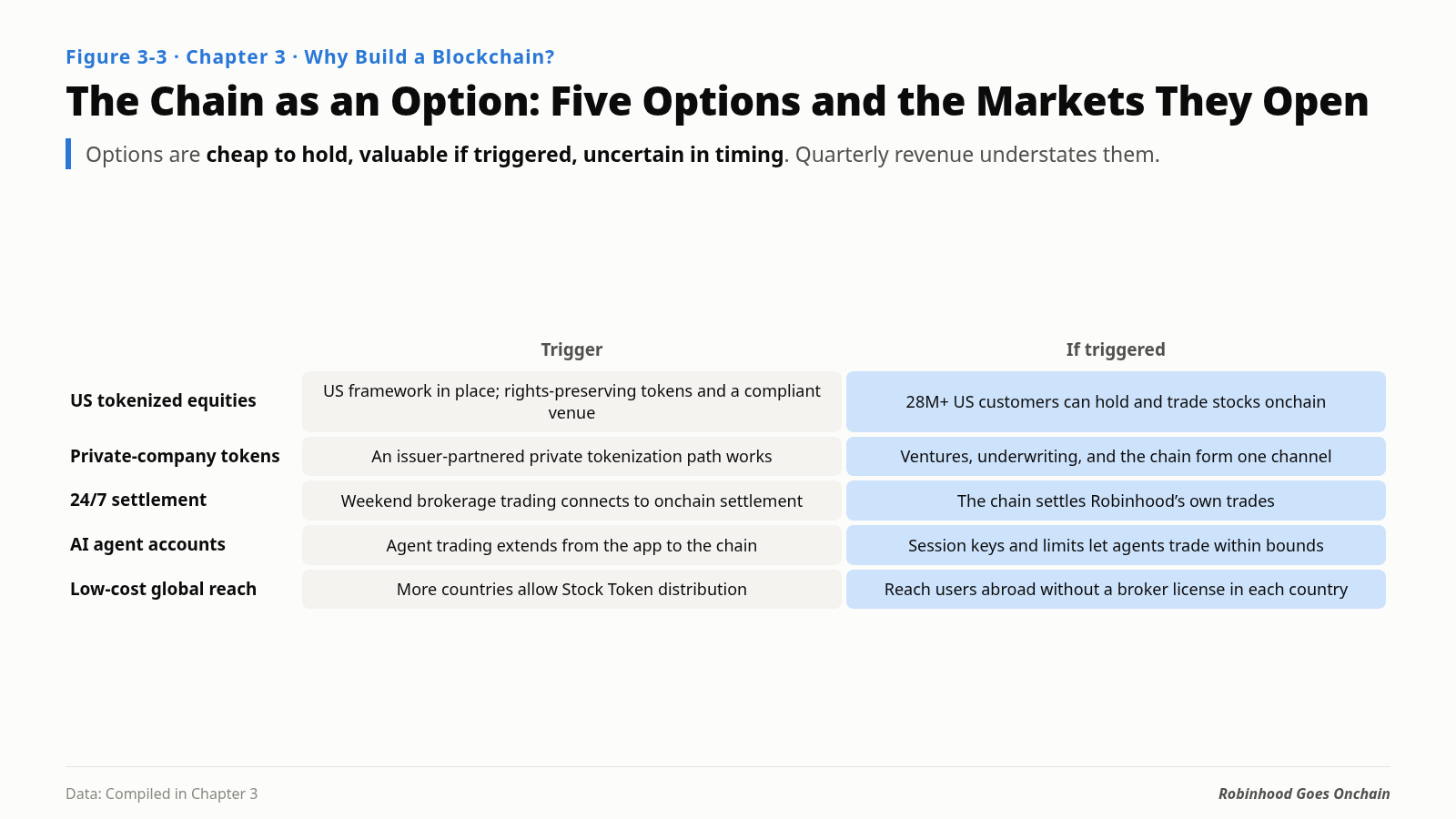
Robinhood Chain's revenue fell to under 0.4% of Robinhood's revenue by October. Measured by sequencer fees, it wasn't worth building. Read as the fourth barrier Robinhood is removing, it is a portfolio of options: tokenized U.S. equities, private-company tokenization, 24/7 settlement, AI agent accounts and low-cost international distribution.
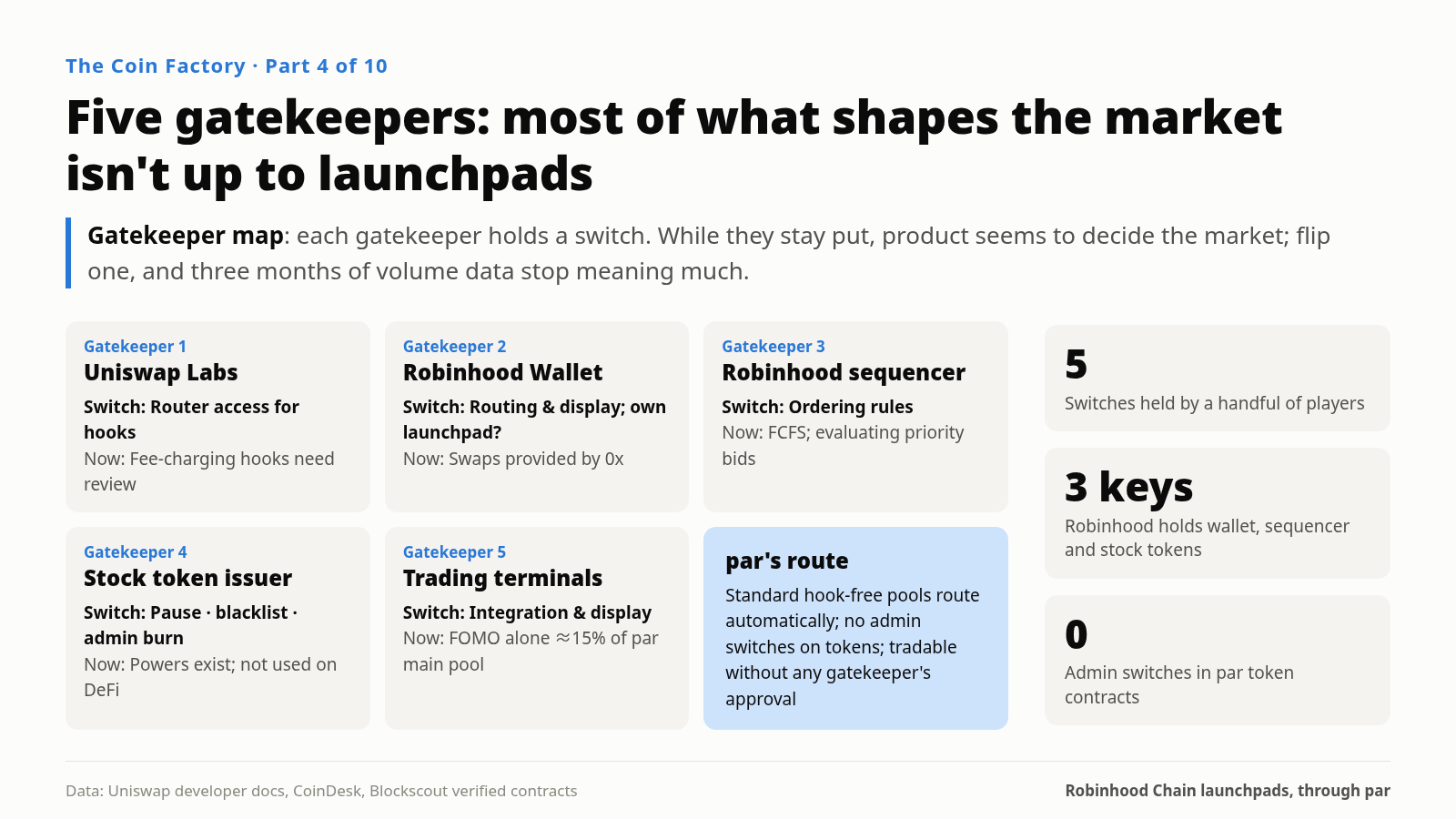
Five technical switches held by a handful of players — Uniswap's hook router access, Robinhood Wallet routing, sequencing rules, stock token issuer powers and trading terminals — can reshuffle Robinhood Chain's launchpad market faster than any product launch.
· 9h
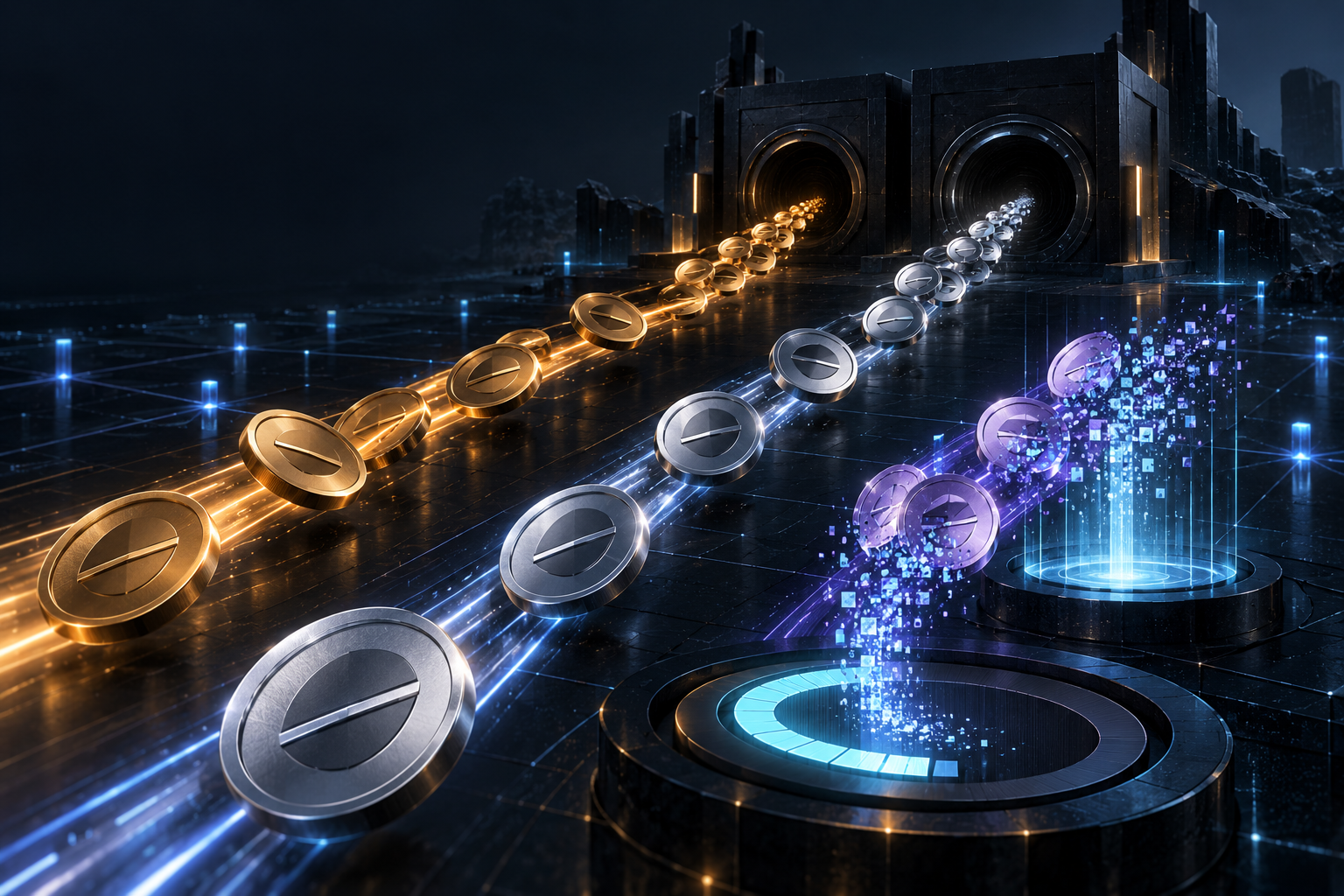
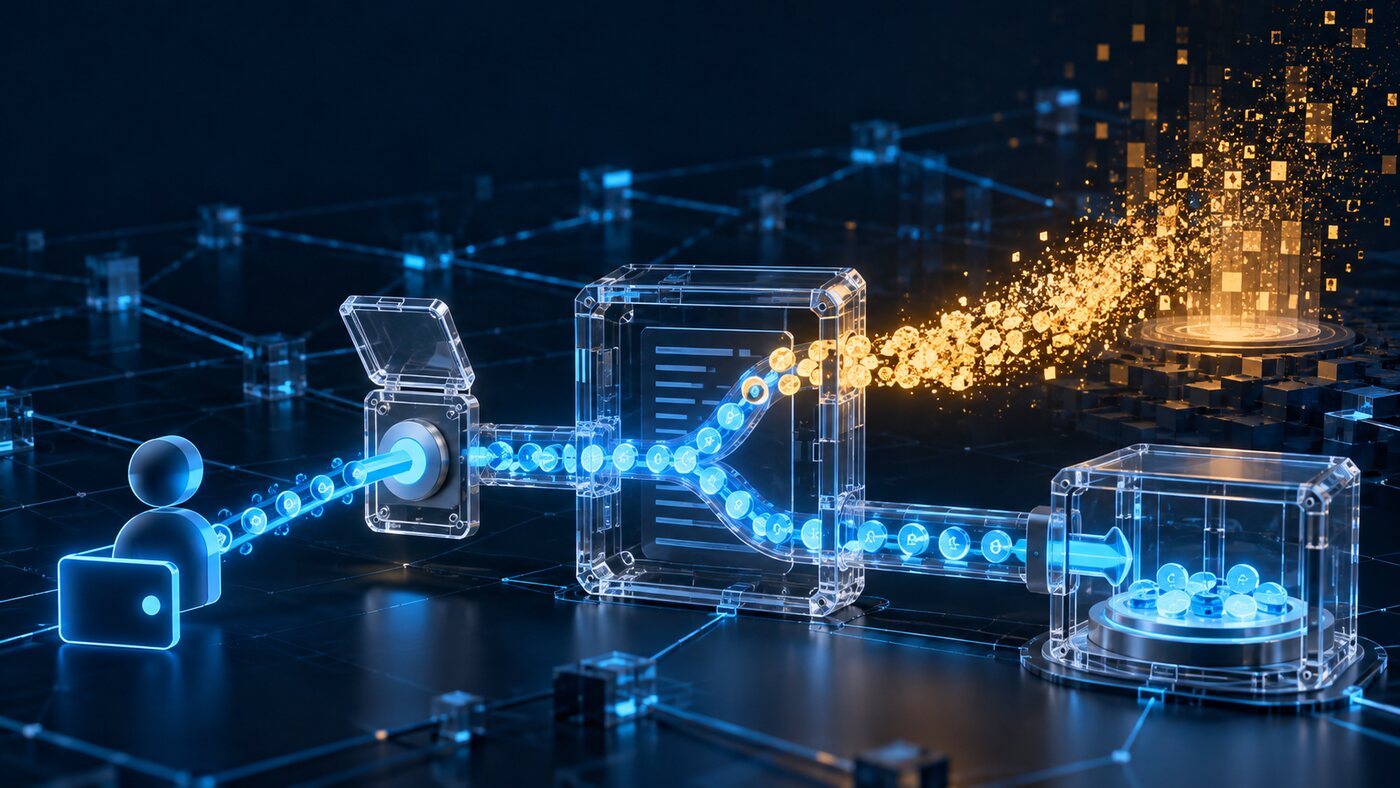
PONS and HOOKR send tokens to a dead address, while PAR reduces totalSupply directly. Here is what the on-chain data really shows—and why burn mechanics matter less than the revenue that sustains them.
· 10h
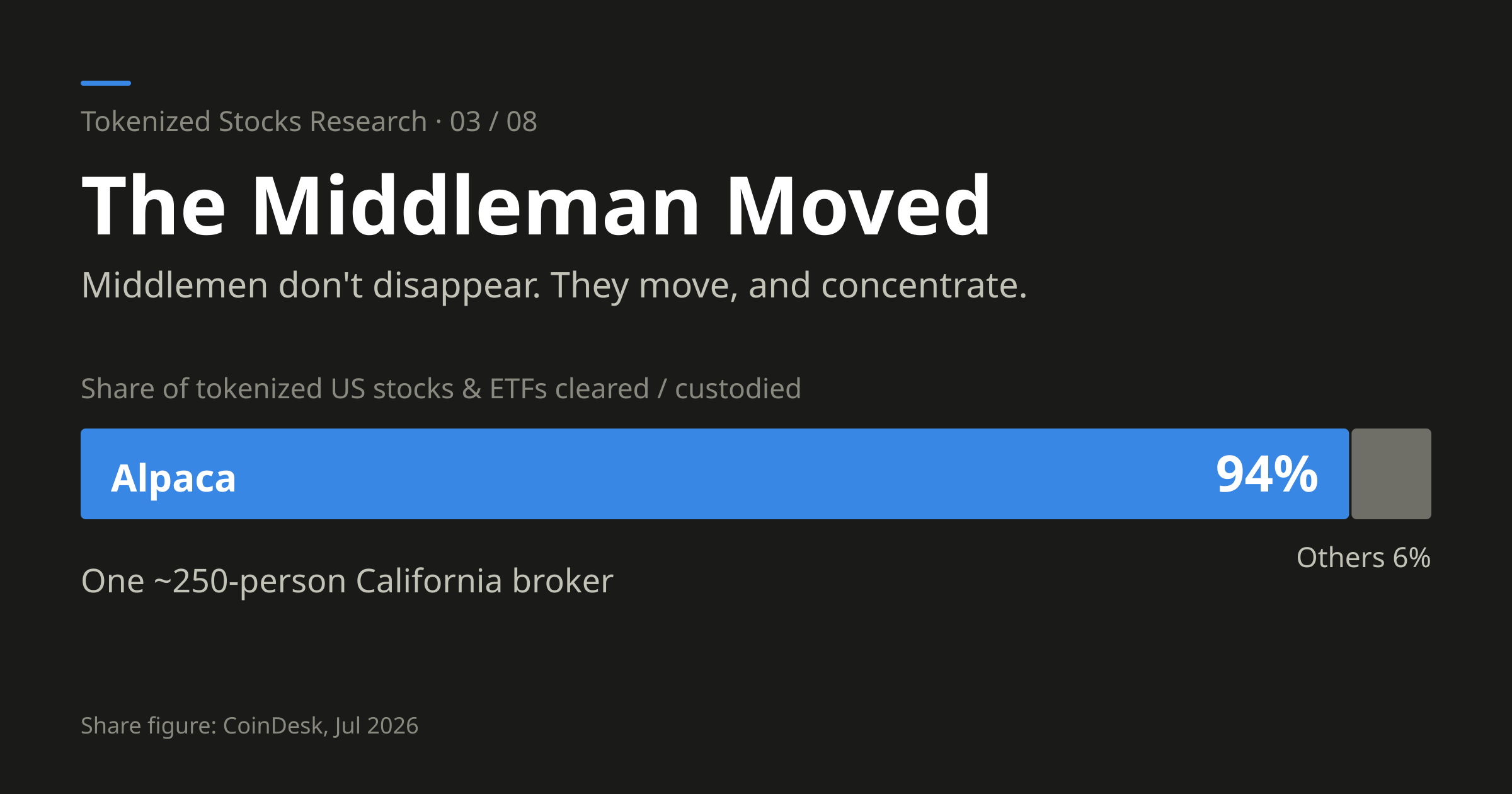
An industry built on cutting out the middleman has concentrated about 94% of tokenized US stock and ETF clearing and custody in one ~250-person California broker, Alpaca. Middlemen don't disappear. They move, and they concentrate.
· 22h
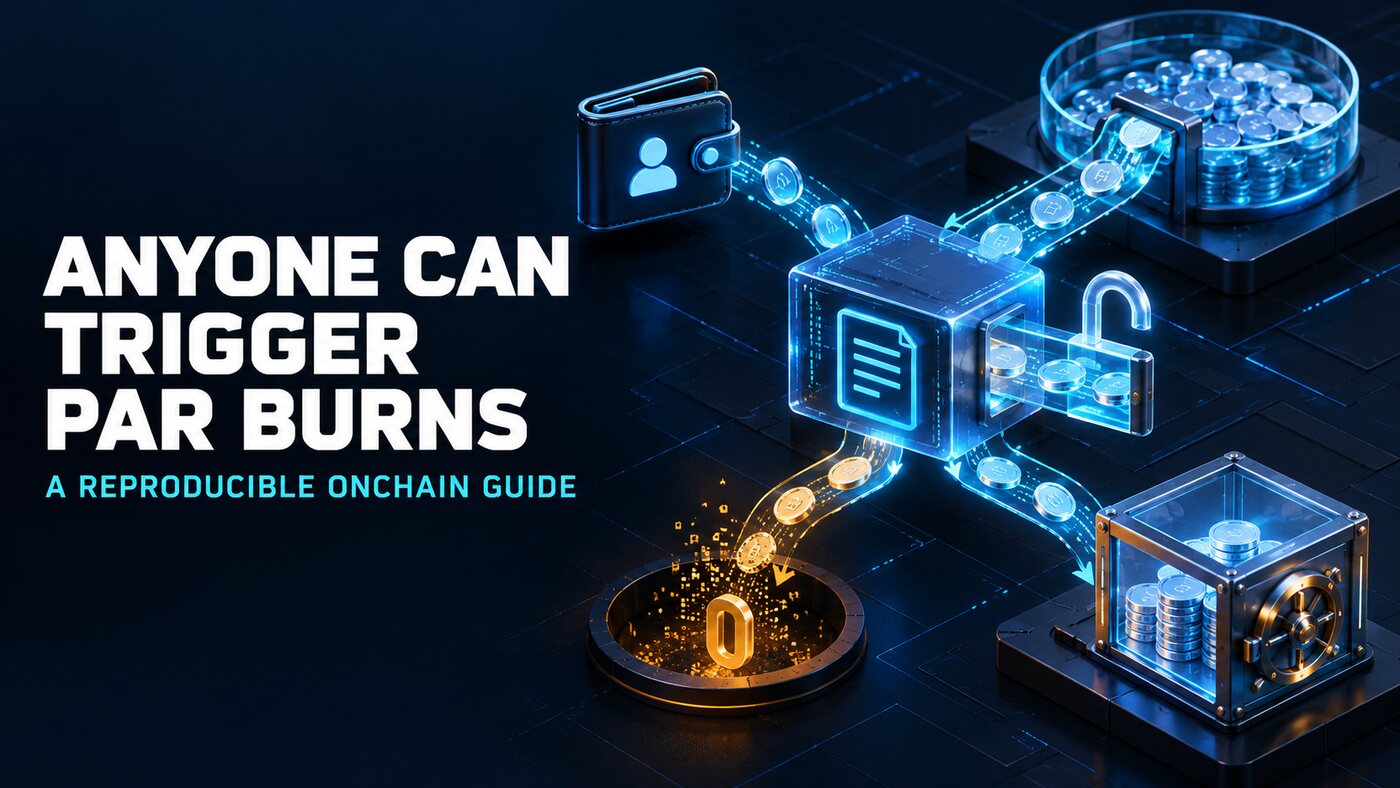
A practical community guide to PAR's direct-burn mechanism: inspect pendingFees, simulate collectFees, trigger it through a wallet or raw calldata, and verify the result from onchain evidence.
· 1d
Robinhood has about 28.6 million funded customers and, since July 2026, its own blockchain. Three months in, DEX volume on Robinhood Chain had passed $110 billion, yet trades identifiable as Robinhood app users were only about 1–2% by one estimate. In September the SEC opened a door for onchain stock trading that Robinhood's current tokens cannot use. This case study of the first year offers five frameworks and 12 indicators to watch. No price forecasts; not investment advice.
An ordinary holder triggered PAR's fee burn without admin privileges. This mainnet case study traces the stalled keeper, accumulated fees, and the permissionless execution that burned 1.4787 million PAR.
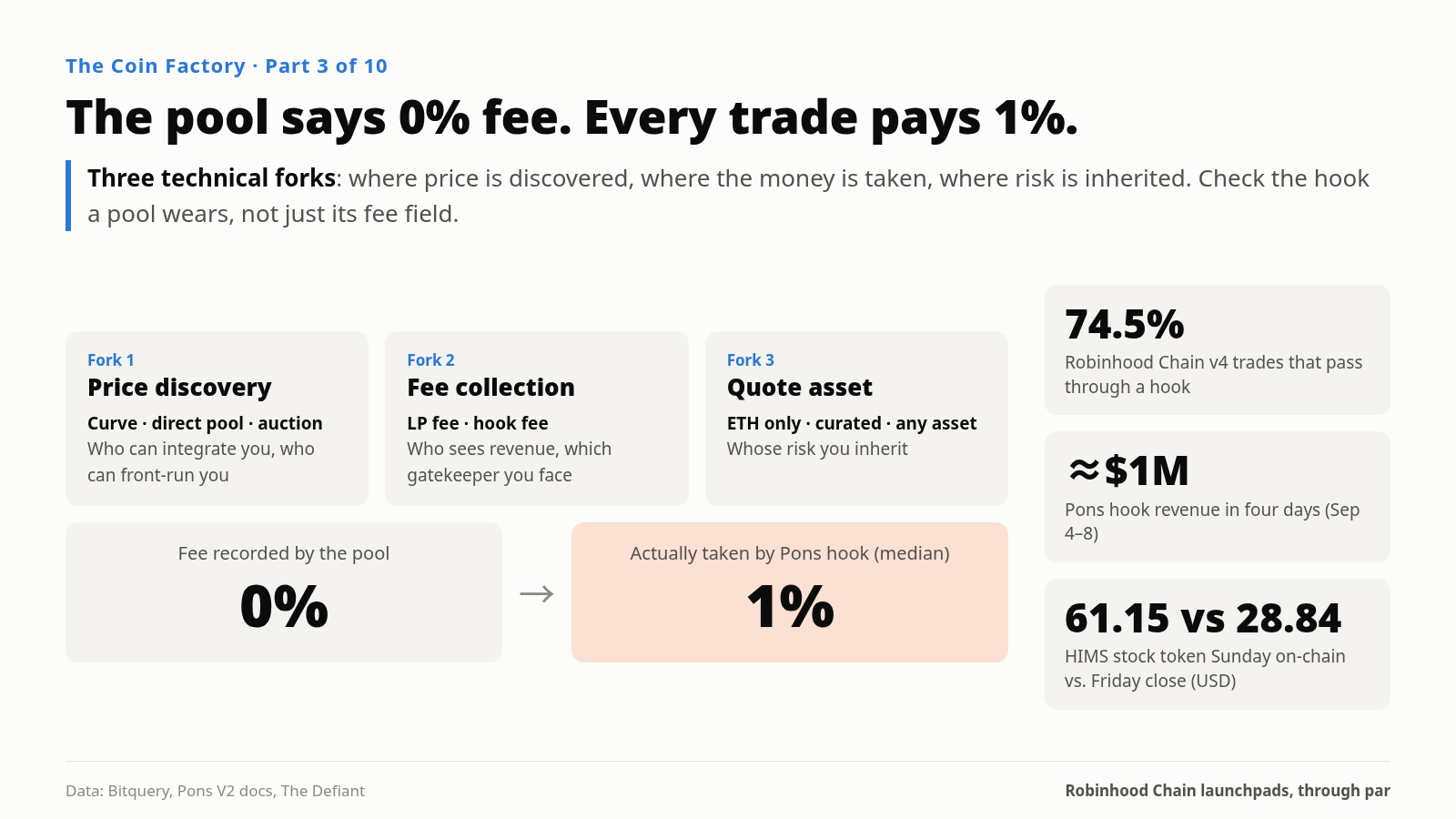
Pons pools on Robinhood Chain record a 0% fee, but its hook takes a median 1% per trade. How three technical forks (price discovery, fee collection, quote asset) decide who can integrate a launchpad, who can front-run it and who can see its revenue.
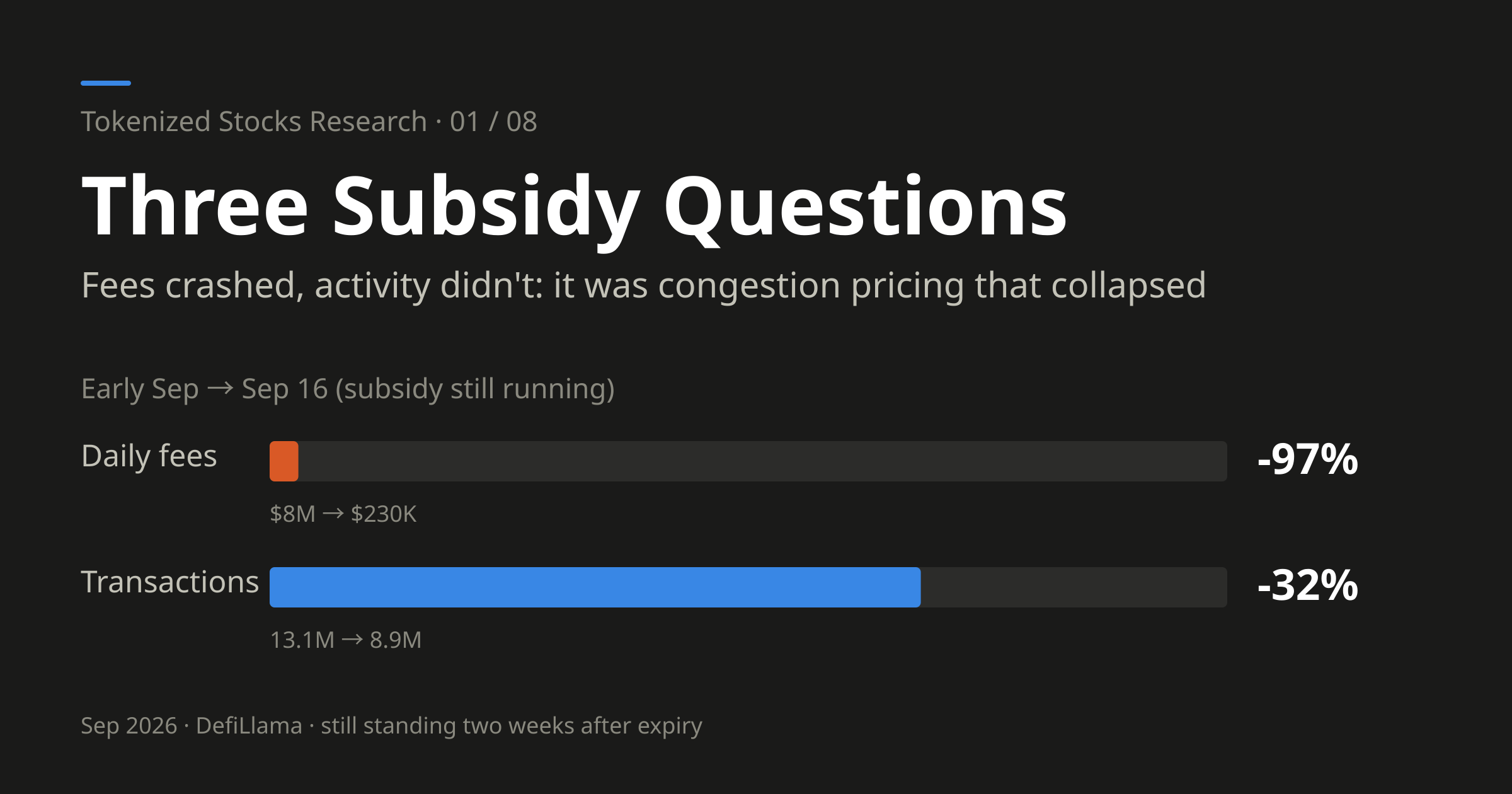
Robinhood Chain's gas subsidy was under 1% of cumulative fees, reached 1-2% of transactions, and only covered gas above a $0.50 threshold. Two weeks after it expired, the chain is still standing and TVL is up 5%. Three questions to ask about any subsidy.
Share with your followers.
Reply